Understanding your test results.

Understanding your test results
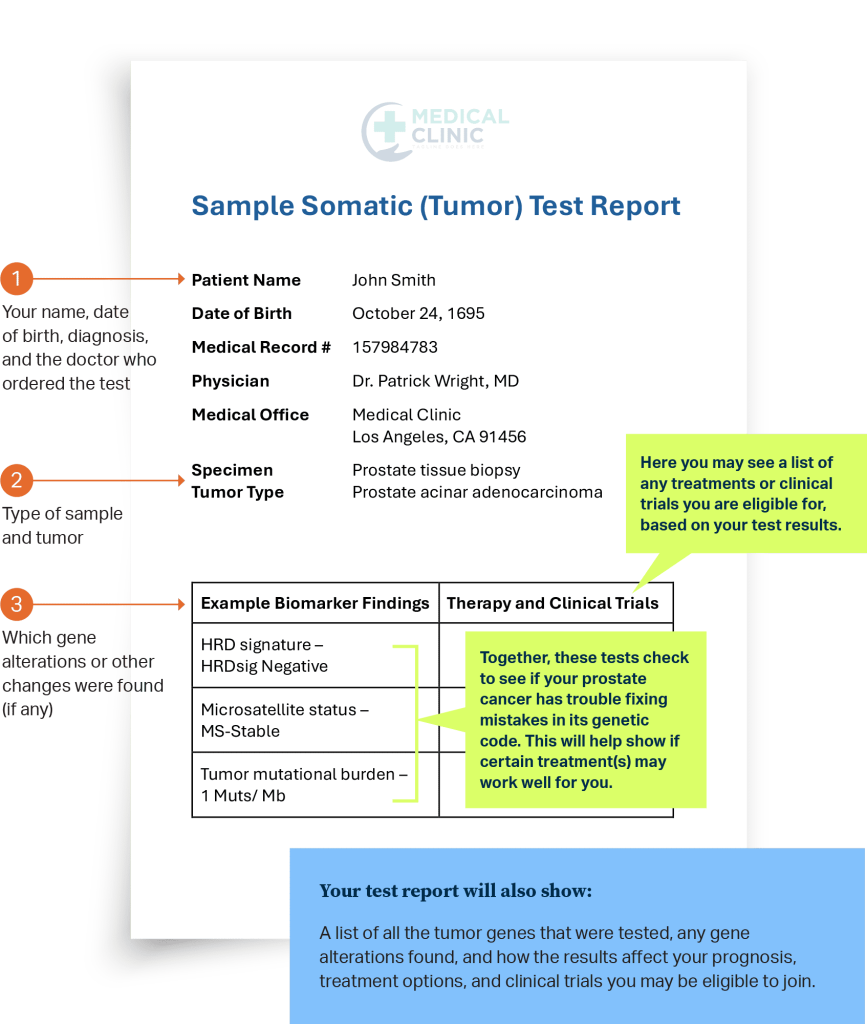
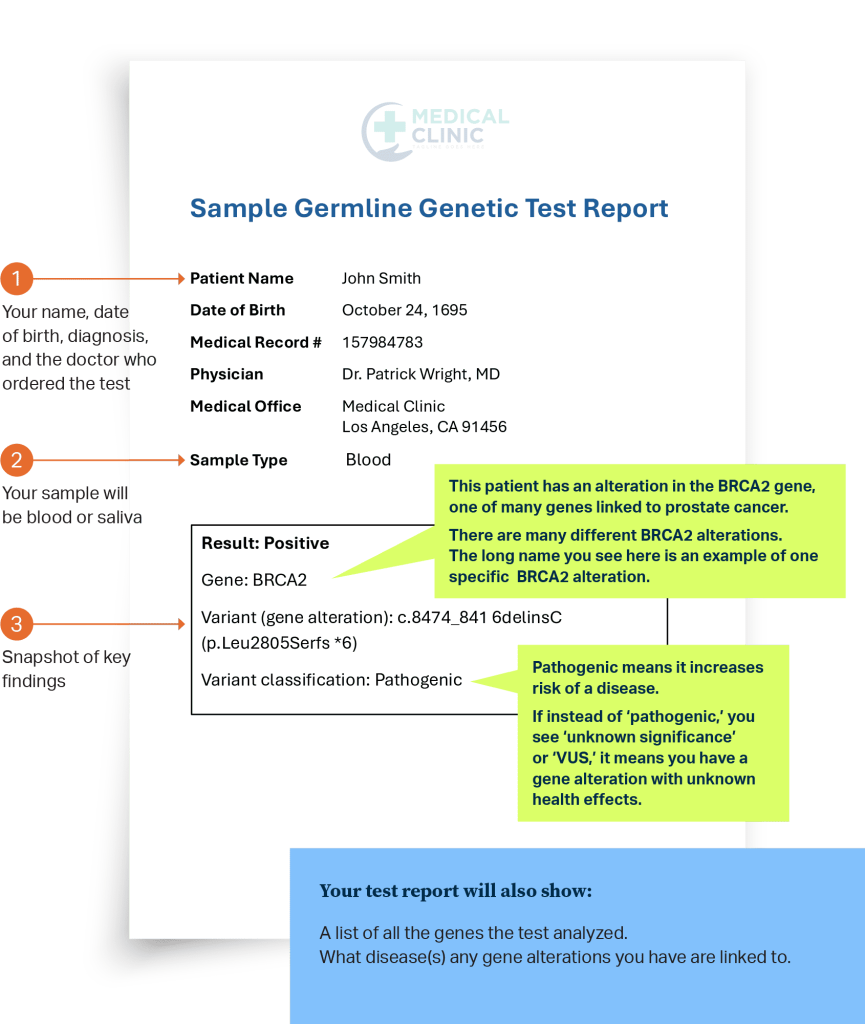
Understanding the basics of your test results will help you talk with your doctor and care team, ask questions, and work together to plan your treatment. Below are sample somatic and germline genetic test reports, and explanations of key findings.
Your somatic test report will show:
Your germline test report will show:
What if a gene alteration or another change is found?
The doctor who ordered the test will usually contact you to discuss the results, including any gene alterations or other findings. If not, contact the doctor and ask for an appointment. During this visit, ask your doctor to explain what the results mean as far as your treatment options, prognosis, inherited cancer risk, and clinical trial eligibility (see “Questions you can ask”).
My germline genetic test found a gene alteration. What should I tell my family?

If you have an inherited gene change linked to cancer, your close blood relatives, such as children or siblings, could have it too.
Sharing your results can feel hard, but it helps relatives make informed choices about genetic testing, earlier cancer screening and other steps to protect their health.
A genetic counselor can help you understand your germline test results and decide which relatives to tell and how. Ask your doctor for a referral, or use the National Society of Genetic Counselors’ Find a Genetic Counselor directory.
Family members thinking about germline genetic testing should talk with a doctor or genetic counselor first, so they understand what the results would mean for them.
Having a gene alteration that is linked to cancer does not mean someone will get the disease, but it can raise their risk.