What are somatic and germline genetic testing?
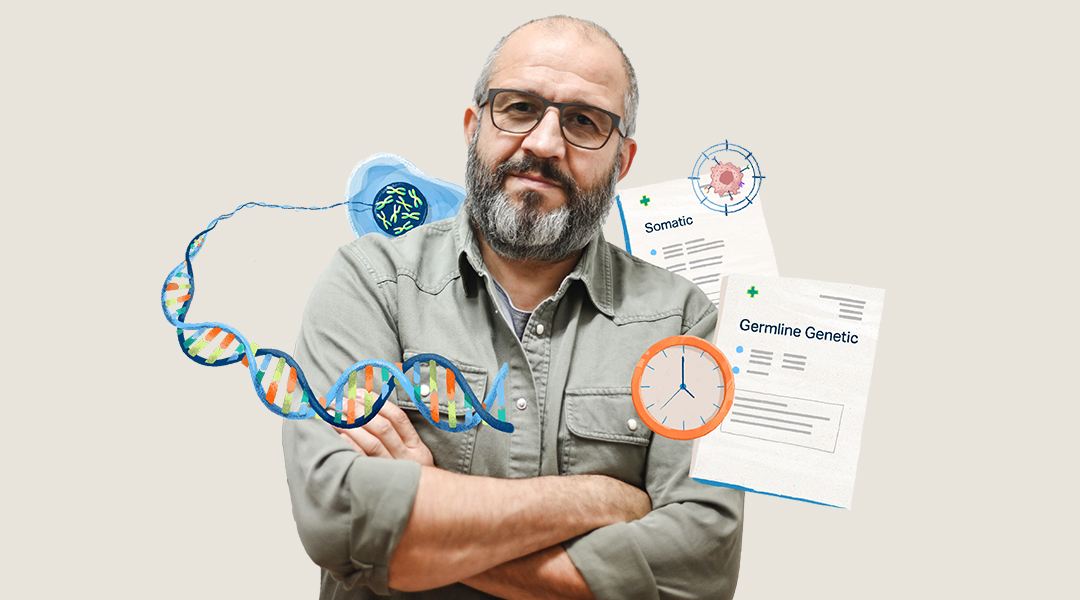
Advanced prostate cancer is different for everyone.
A treatment that works well for one person may not help someone else. Fortunately, specific tests are available to help your doctor and you choose the right treatment. Ask your doctor about:
- Germline genetic testing, which checks for specific gene changes some people are born with.
- Somatic testing, which checks for changes in tumor genes that can happen during your lifetime.
If your prostate cancer has recently been found to have spread and is still responding to hormone therapy, also ask about PTEN testing, which could help guide your first treatment decisions.
These tests can also help show how your cancer may grow and change over time, whether you may be eligible to join a clinical trial of a new treatment, and whether your family members may be at increased risk for certain cancers. This helps everyone take action to support the best possible health outcomes.
What is DNA?
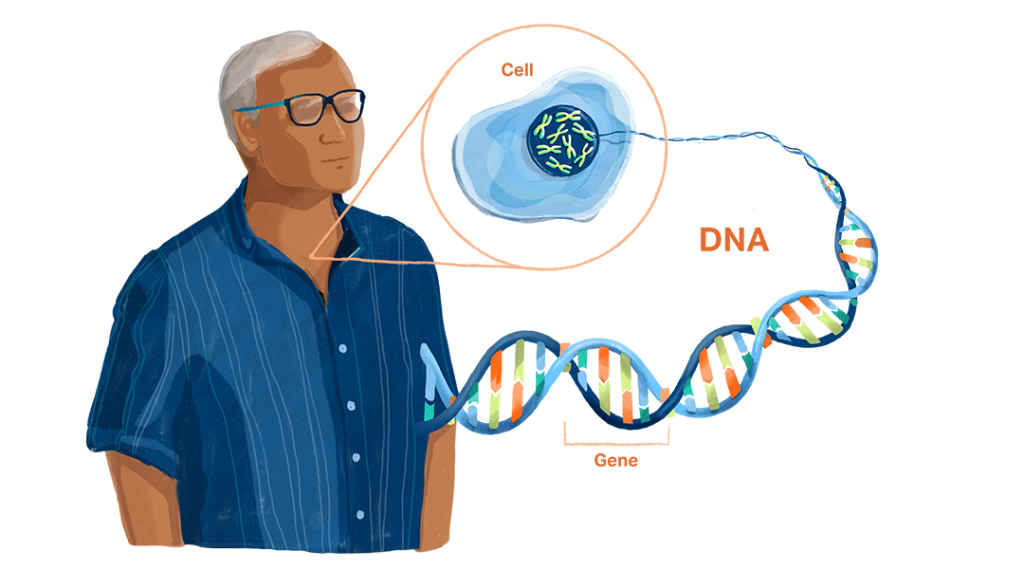
DNA is the chemical code that tells your body how to look, grow, and work. Every cell in your body has a copy (except your red blood cells).
What is a gene?
DNA contains thousands of sections called genes. Many genes have instructions for making proteins. These proteins help control how cells grow and how your body works.
What is a gene alteration?
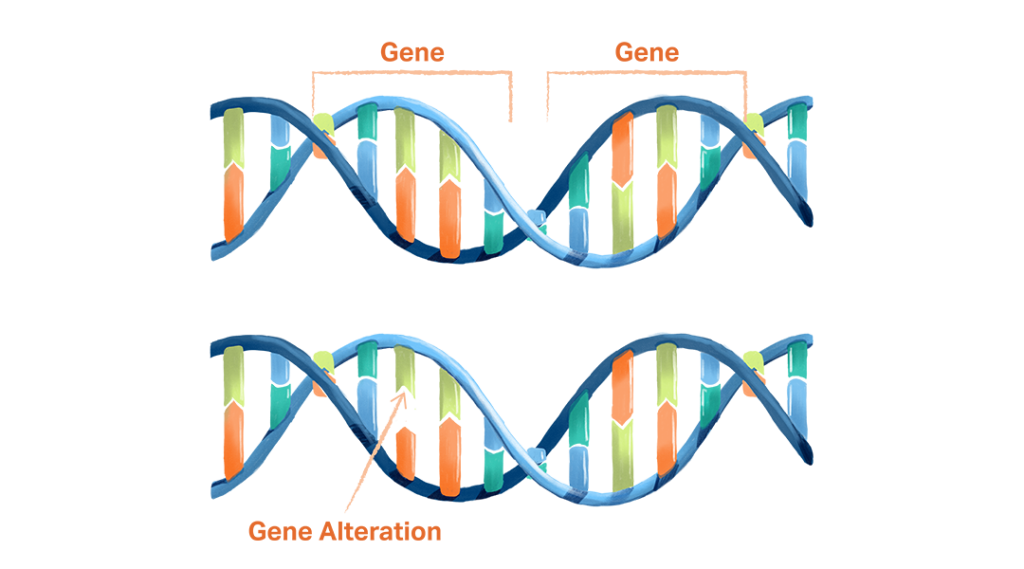
A gene alteration is a permanent change in the DNA of a gene. Gene alterations can be inherited from a parent, or can occur after birth.
There are millions of different gene alterations. Some do not affect how your body works. Others may increase your risk of cancer or other diseases, make a disease more aggressive, or affect how well certain treatments work.
What are somatic and germline genetic testing?
Somatic and germline testing are two different types of genetic tests that provide important information about your prostate cancer. If you have advanced prostate cancer, experts recommend getting both types of tests.
Somatic testing
Somatic testing looks for specific changes in the DNA and proteins of your tumor cells that can drive tumor growth and treatment response. This test uses tumor tissue from a prostate biopsy or surgery. If tumor tissue is unavailable, a blood sample can be tested for circulating tumor DNA (ctDNA). Somatic testing is sometimes called genomic testing, tumor testing, or biomarker testing. These terms all mean the same thing.
Germline genetic testing
Germline genetic testing looks at your healthy cells for gene alterations you inherited from your parents. The test is done on a saliva or blood sample. Germline genetic testing is sometimes called hereditary testing or inherited cancer risk gene testing. These terms all mean the same thing.
Both somatic and germline genetic testing use broad (multigene) panels to look at many different genes at the same time. These genes include homologous recombination repair (HRR) genes such as BRCA1 and BRCA2, mismatch repair (MMR) genes, and many others.
Somatic testing looks at the genes and proteins of your tumor cells. Germline genetic testing looks at genetic information you inherit from your parents. If you have advanced prostate cancer, both types of tests are important to guide treatment decisions.